
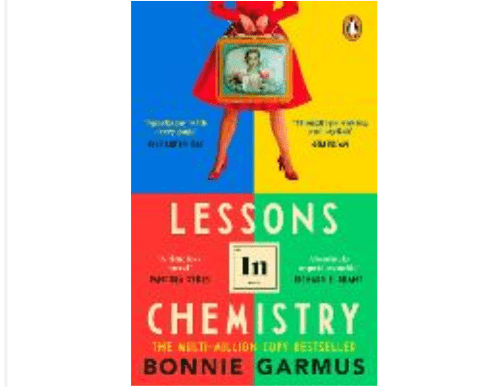
Lessons in Chemistry by Bonnie Garmus
It’s 1952 America and women did not have a voice, they were not allowed dreams or an independent life and if any female had the audacity to even attempt a career she would be ridiculed and patronised by peers, put down by superiors and ignored by the men in her life who were supposed to be supporting her. A women’s role was to produce and look after the babies, pander to her husband whims despite his often vast shortcomings and never complain.
Elizabeth Zott is a chemist. Elizabeth Zott is determined to gain an education, she is a brilliant researcher and yet manages to achieve nothing – not on paper anyway as her peers and superiors demean her, steal her work and believe she is demented to even think she can be taken seriously and have her work recognised as her own.
We can gasp at the complete unfairness of it all, but this was the life faced by many women all over the world in the 1950s. We can consider that things have changed these days and there is progress, but is it complete?
Forced out of a job as a scientist Elizabeth unexpectedly and reluctantly starts a daily cooking show. With her mantra of ‘cooking is chemistry’, she unflinchingly teaches an enthusiastic nation chemistry via her delicious and nutritious recipes.
Often controversial, Elizabeth’s style and insistence that women be recognised for their essential family contributions, her repetition that women are allowed to have a life of their choosing starts to open their eyes and help them understand that not only can they have dreams, they can also pursue them. Taking the nation by storm, Elizabeth’s program is a huge success and whilst this new found fame doesn’t resolve her own immediate or past challenges, it sets in motion the cogs needed to both help Elizabeth recognize and recommit to who she wants to be, as well as delve into the mysteries of her partner’s family’s past.
In my opinion, this book should be on the IB high school reading list as it is an excellent text to highlight the misogynistic attitude of the past, of the sheer lack of women’s rights and expectations as well as generating discussion on how this is still an issue today. Whilst some countries have progressed and continue to do so, an alarming number have not and even worse, some nations are trying to turn the clock back and get women trapped in the home again against their will.
